Imagine a kitchen where every spice is exactly where you need it, easily accessible, and beautifully displayed. No more rummaging through cluttered cabinets or digging for that elusive cumin! A Diy Spice Rack isn’t just about storage; it’s about transforming your culinary experience, adding a touch of personal flair, and bringing harmony to your kitchen.
What is a DIY Spice Rack and Why Bother?
At its heart, a DIY spice rack is a custom-made solution for organizing your herbs and spices, tailored precisely to your kitchen’s unique dimensions and your personal style. While store-bought options are readily available, creating your own “do-it-yourself” spice rack empowers you to craft something truly special.
For generations, cooks have found clever ways to keep their essential flavors close at hand. From simple shelves to intricate built-ins, the need for efficient spice storage has always been paramount. Today, with a renewed interest in home improvement and personalized living spaces, the DIY spice rack has become a popular project for home cooks and decor enthusiasts alike.
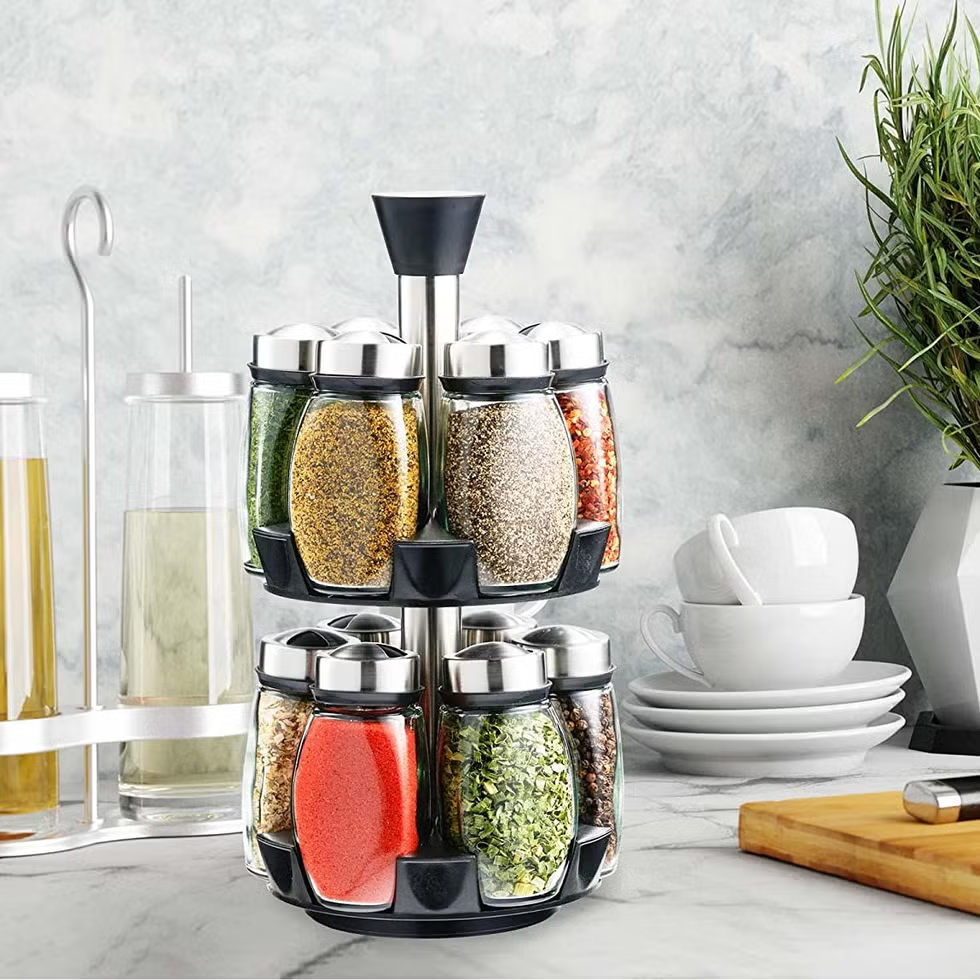
The Undeniable Benefits of a DIY Spice Rack
Why go the DIY route? The advantages are plentiful and impactful:
- Customization and Personalization: This is perhaps the biggest draw. You’re not limited by standard sizes or designs. You can choose the materials, dimensions, and finish to perfectly match your kitchen aesthetic, whether it’s rustic farmhouse, sleek modern, or eclectic boho. Want shelves spaced exactly for your favorite spice jars? You got it!
- Cost-Effectiveness: Often, building your own spice rack is significantly cheaper than purchasing a high-end commercial alternative. You can utilize scrap wood, repurpose old items, or source affordable materials, saving money that can be spent on, well, more spices!
- Space Optimization: Every kitchen has its quirks. A DIY approach allows you to make the most of awkward corners, narrow spaces between cabinets, or the often-underutilized back of a pantry door. You can design a rack that fits precisely where no off-the-shelf solution ever could.
- Enhanced Kitchen Efficiency: When your spices are organized and visible, cooking becomes a more fluid and enjoyable process. No more frantic searches mid-recipe! This efficiency not only saves time but also encourages more adventurous cooking, as you’ll be more inclined to experiment with different flavors.
- Sustainability and Upcycling: Giving new life to old materials is incredibly rewarding. Transforming reclaimed wood, vintage crates, or even old cooling racks into a functional spice organizer reduces waste and adds character to your home. It’s a wonderful way to practice mindful consumption.
Types of DIY Spice Racks: Find Your Perfect Fit
The beauty of a DIY spice rack lies in its versatility. There’s a design for every kitchen layout, skill level, and aesthetic preference.
Wall-Mounted Spice Racks
These are a fantastic option for freeing up counter or drawer space.
- Floating Shelves: Simple, elegant, and modern. These minimal shelves create a clean look and are perfect for displaying a curated collection of favorite spices. They’re often easy to install with just a few screws.
- Tiered Designs: For those with a larger spice collection, tiered wall-mounted racks offer multiple levels of storage, allowing you to see all your spices at a glance.
- Hanging Racks: Whether mounted on a wall, inside a pantry door, or on the side of a cabinet, hanging racks are incredibly space-efficient. They often feature rails or small ledges to keep bottles secure.
Drawer Organizer Spice Racks
If you prefer your spices tucked away, a drawer organizer is ideal.
- Slanted Inserts: These custom inserts can be built to fit any drawer size, holding spice jars at an angle for easy viewing and access. They keep bottles from rolling around and create a neat, uniform look.
- Custom Dividers: Simple wooden dividers can separate your drawer into compartments, allowing you to arrange jars upright or lay them down flat.
Countertop Spice Racks
While the goal is often to clear counters, a compact and stylish countertop DIY spice rack can be a focal point.
- Tiered Countertop Racks: Similar to wall-mounted versions but designed to stand freely, these can be made from wood or other materials.
- Rotating Spice Racks: Though more complex to build from scratch, a rotating design offers 360-degree access to your spices.
Magnetic Spice Racks
Ingenious for small kitchens, magnetic spice racks utilize vertical surfaces.
- Magnetic Strips: By attaching magnetic strips to a wall or the side of your refrigerator, you can use magnetic-bottomed spice tins to create a floating spice display. This solution is especially great for rented spaces as it often requires minimal installation.
Built-in Spice Racks
For a truly integrated look, a built-in spice rack can be recessed into a wall between studs, providing seamless storage that appears to be part of the architecture. This option requires a bit more woodworking know-how but offers a stunning, custom finish.
Upcycled & Creative Spice Racks
Think outside the box!
- Pallet Wood Racks: Reclaimed pallet wood offers a rustic charm and is an eco-friendly choice.
- Cigar Boxes or Small Crates: These can be stacked, glued, or screwed together to form unique modular storage units.
- Cooling Racks: Believe it or not, some clever DIYers have bent old wire cooling racks into simple, hanging spice organizers for pantry doors.
- Test Tube Racks: For a minimalist and scientific look, a strip of wood with drilled holes can hold test tubes filled with spices, corked for freshness.
Choosing the Right DIY Spice Rack for Your Kitchen
Before you grab your tools, take a moment to consider what truly works for your space and your lifestyle. This thoughtful planning is key to a successful diy spice rack project.
- Assess Your Space: Where do you currently store your spices, and what areas are underutilized?
- Do you have an empty wall section near your stove? A wall-mounted or floating shelf might be perfect.
- Is there a deep, unused drawer? Consider a drawer insert.
- Do you have a pantry door that could hold extra storage? A hanging rack could be ideal.
- Is your refrigerator side often bare? A magnetic option could be a game-changer.
- Consider Your Spice Collection Size: A small collection might only need a tiny minimalist rack, while a burgeoning array of international flavors will demand a more robust, multi-tiered solution.
- Desired Aesthetic and Skill Level: What look are you going for? Modern, rustic, industrial? Also, be honest about your DIY skills. A simple floating shelf requires fewer tools and less expertise than a complex built-in unit. There are many beginner-friendly plans available that yield fantastic results.
- Material Considerations:
- Wood: Versatile, warm, and easy to work with. Pine is a popular choice for its affordability and workability. Plywood can be used for backs or shelves.
- Metal: Can provide an industrial or sleek modern look. Magnetic strips are common.
- Acrylic: Offers a contemporary, transparent aesthetic, though it can be more challenging to cut and shape at home.
Essential Tools and Materials for Your DIY Spice Rack Project
While specific projects will vary, here’s a general idea of what you might need to build your own diy spice rack:
Common Materials
- Wood: Pine boards, plywood, reclaimed wood, dowel rods (for rails).
- Fasteners: Wood screws, finishing nails, wood glue.
- Finishing Supplies: Wood stain or paint, sandpaper (various grits), polyurethane or sealant.
- Spice Jars & Labels: Uniform jars give a clean look; labels are crucial for easy identification. Magnetic spice tins for magnetic racks.
- Mounting Hardware: Wall anchors, heavy-duty double-sided tape (for lightweight floating shelves).
Basic Tools
- Measuring & Marking: Tape measure, ruler, pencil, speed square.
- Cutting: Hand saw, miter saw (for precise cuts), circular saw, jigsaw (for curves).
- Drilling: Electric drill/driver, various drill bits (including a Forstner bit for dowel holes if needed).
- Assembly: Wood clamps, hammer, screwdriver set.
- Sanding: Hand sander or orbital sander.
- Level: Essential for ensuring your rack is straight.
Advanced Tools (for more complex projects)
- Kreg Jig: For creating strong pocket-hole joints, common in woodworking plans.
- Router: For decorative edges or dados (grooves for shelves).
- Brad Nailer: For quickly and neatly attaching smaller pieces or trim.
Simple Steps to Building Your Own DIY Spice Rack (General Guide)
While every diy spice rack project is unique, here’s a general workflow to guide you:
- Plan and Measure: This is the most critical step. Measure your intended space precisely. Lay out your spice jars to determine ideal shelf heights and widths. Sketch your design.
- Cut Materials: Carefully cut your chosen wood (or other material) to your planned dimensions. Always measure twice, cut once!
- Prepare Components: Sand all rough edges smooth. Pre-drill pilot holes where screws will go to prevent wood splitting.
- Assemble the Structure: Use wood glue, screws, and/or nails to assemble the main frame of your spice rack. If using dowels for rails, drill appropriate holes and secure the dowels.
- Finish Strong: Apply wood filler to any nail or screw holes, then sand again until perfectly smooth. Stain or paint your rack in your desired finish. Apply a protective sealant like polyurethane for durability, especially in a kitchen environment.
- Install with Care: Mount your finished diy spice rack securely to the wall, inside a cabinet, or on your pantry door using appropriate hardware. Use a level to ensure it’s straight.
Expert Tips for Organizing and Maintaining Your Spice Rack
Once your magnificent DIY spice rack is complete, a few smart habits will keep it functional and beautiful.
- Labeling is Key: Clear, consistent labels are non-negotiable. Consider using a label maker, chalkboard labels, or even handwritten labels for a personal touch. Include the spice name and expiration date.
- Store Spices Correctly: Spices lose their potency when exposed to heat, light, and air. Keep your spice rack away from direct sunlight, the stove, or dishwasher if possible. Airtight jars are crucial for preserving freshness.
- Regular Decluttering and Refilling: Go through your spices periodically. Discard expired ones, and consolidate duplicates. Refill your jars from bulk bags to save money and reduce waste.
- Keep it Clean: A quick wipe-down with a damp cloth will keep your spice rack looking pristine.
“A truly organized kitchen starts with understanding your needs, not just buying another gadget,” advises Clara Jenkins, a renowned kitchen efficiency expert. “When you build a DIY spice rack, you’re not just creating storage; you’re creating a system that intuitively works for you, leading to less stress and more joy in cooking.”
Trends and Innovations in DIY Spice Rack Design
The world of kitchen organization is always evolving, and DIY spice racks are no exception. We’re seeing exciting trends that combine functionality with modern aesthetics:
- Smart Storage Integration: DIYers are increasingly incorporating smart features, like pull-out shelves within existing cabinets or hidden compartments.
- Eco-Friendly Focus: The use of reclaimed materials, bamboo, and low-VOC finishes is becoming more popular, reflecting a broader commitment to sustainable living.
- Minimalist Aesthetics: Clean lines, neutral colors, and discreet designs are in vogue, allowing the colorful spices themselves to be the visual highlight.
- Multi-functional Racks: Some creative designs integrate other kitchen essentials, like a paper towel holder or small cubbies for measuring spoons, into the spice rack itself.
Frequently Asked Questions
How long does it take to build a DIY spice rack?
The time it takes varies widely depending on the complexity of your chosen design and your skill level. A simple floating shelf might take a couple of hours, while a complex built-in unit could take a weekend or more.
What kind of wood is best for a DIY spice rack?
Pine is a popular choice for its affordability, availability, and ease of working. Other options include poplar, birch plywood, or even reclaimed hardwoods for a more durable and distinctive finish.
Can I make a DIY spice rack without power tools?
Absolutely! Many simple designs, like those using small crates, cooling racks, or basic wooden shelves, can be assembled with hand tools like a hand saw, drill, hammer, and screwdriver.
How do I ensure my spice rack holds my jars securely?
For open shelves, consider adding a small lip or rail at the front of each shelf to prevent jars from falling. For drawer inserts, ensure the dimensions are snug to keep jars from shifting. Magnetic racks require strong magnets and lightweight tins.
What’s the easiest DIY spice rack for beginners?
A floating shelf with a small front lip or a simple tiered wooden rack that sits on a countertop are excellent starting points for beginners, requiring minimal tools and woodworking experience.
Conclusion
Embarking on a DIY spice rack project is more than just a home improvement task; it’s an investment in a more organized, efficient, and inspiring kitchen. From the satisfaction of creating something with your own hands to the joy of easily finding that perfect pinch of paprika, the benefits are clear.
We at SpiceRackPro believe in empowering every home chef with tools that simplify and elevate their culinary journey. By choosing to build your own custom spice rack, you’re not only embracing innovation in your kitchen but also making a conscious commitment to quality and personalization. So, why wait? Roll up your sleeves, unleash your creativity, and craft the spice storage solution that will bring order, efficiency, and a dash of unique style to your cooking space for years to come.